Last updated: 21 May 2026
Cruise Ship Terminology: The 30-second view
| If you only learn five terms… | |
| Port | Left side of the ship when facing forward |
| Starboard | Right side of the ship when facing forward |
| Muster drill | The safety briefing you must attend before sailing |
| Embarkation / Disembarkation | Boarding and leaving the ship |
| All aboard time | When you must be back onboard at each port |
The terminology side of cruising is where first-time guests trip up most often. We’ve had guests miss their muster drill because they thought it sounded like an optional meeting. We’ve had repeat cruisers still asking why their cabin is called a stateroom. Read this once, save the key terms, and stop worrying about it. You’ll pick the rest up onboard.
Josh Harris, Paramount Cruises
Cruise ship terminology can feel confusing, even for seasoned travellers. From nautical directions like port and starboard to emergency announcements such as Code Bravo, cruise ships operate with their own language. This guide explains cruise ship terminology in clear, simple language so passengers know exactly what to expect onboard.
Whether you are planning your first cruise or want to understand exactly what those onboard announcements mean, this comprehensive guide explains the most important cruise ship terms, dining jargon, cabin categories, and emergency codes so you can cruise with confidence.
This guide is written by cruise specialists at Paramount Cruises, helping thousands of guests choose the right ship, cabin, and cruise line every year.
Cruise Ship Directions Explained
Unlike land-based directions, cruise ships use fixed nautical terms, so directions never change, regardless of which way you are facing.
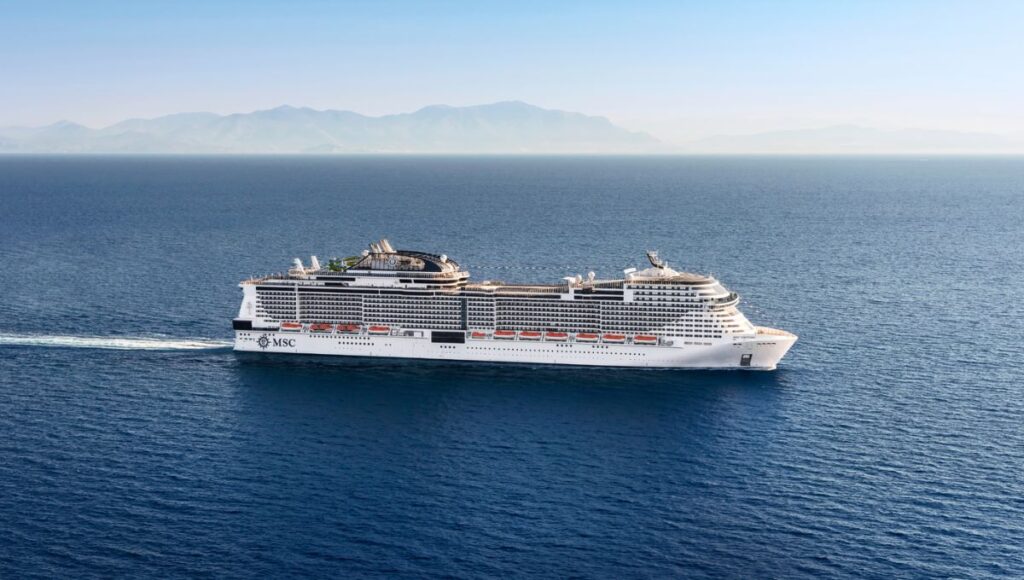
Bow refers to the front of the ship. This is where the ship cuts through the water and often where you will find observation areas.
Stern is the back of the ship and is a popular place to watch the wake and enjoy quieter outdoor spaces.
Forward means walking toward the bow, while aft means walking toward the stern.
The port is the left side of the ship when you are facing forward. A helpful memory trick is that port and left both have four letters.
Starboard is the right side of the ship when facing forward. Ships use navigation lights to help identify sides, with red lights on the port side and green lights on the starboard side.
Stern: The back of the ship. Aft-facing balconies offer a near-private wake view and are quietly some of the best cabins on board. Cruise nerds will fight you for them.
Leeward: The side of the ship sheltered from the wind. Quieter on a windy day. Less spray over your morning coffee.
Windward: The side facing the wind. Better for sailing photography. Worse for hairstyles.
Cruise Cabin Terms and Deck Layouts
Understanding cruise ship cabins and deck plans helps you choose the best location for comfort and value.
Decks are numbered from the bottom of the ship upwards. Most cruise ships embark passengers on Deck 4 or 5, depending on the vessel.
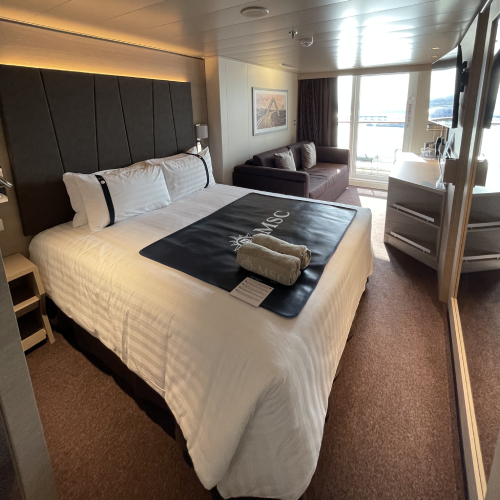
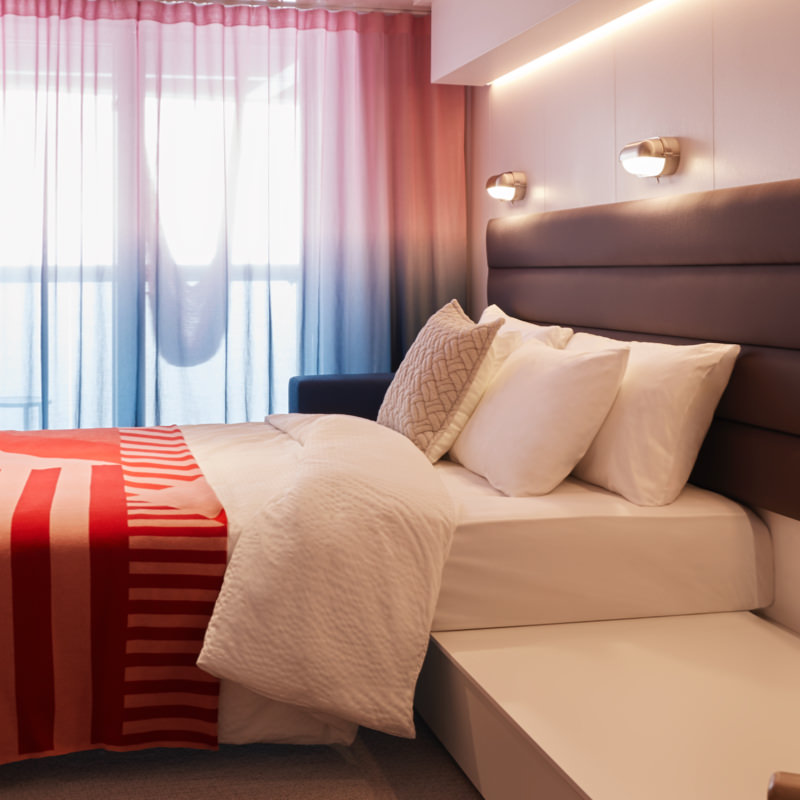
A stateroom is the cruise industry term for your cabin. This applies to inside cabins, oceanview cabins, balcony cabins, and suites.
A berth refers to a sleeping space. A ship with 3,000 berths can accommodate 3,000 passengers. Upper berths or Pullman beds fold down from the wall or ceiling to sleep additional guests.
A guaranteed cabin means you select a cabin category, such as a balcony cabin, but not the exact cabin number. The cruise line assigns the cabin closer to sailing, guaranteeing the category or better. This option is usually cheaper but may result in a less desirable location.
Cabin location tips are especially important. If you are prone to seasickness, choose a lower-deck, mid-ship cabin where movement is minimal. If you are sensitive to noise, avoid cabins directly beneath the pool deck or promenade deck, where early-morning chair movement or late-night entertainment can be disruptive.
Parts of the Ship You’ll Hear Talked About
Beyond left and right, cruise ships have their own anatomy. These are the bits worth knowing so you can find your bearings on a 16-deck floating hotel.
Bridge: The elevated, glass-fronted control room where the Captain and senior officers steer the ship. Crew only, mostly. Some lines run paid bridge tours for the curious.
Galley: The kitchen. On a big modern ship there are several galleys working in parallel, feeding thousands of guests three meals a day plus the midnight buffet. Worth a tour if your line offers one.
Atrium: The cathedral-scale social hub at the heart of the ship. Multi-deck, often glittering, almost always with a piano. Think hotel lobby crossed with a quiet Vegas casino, minus the gambling.
Lido deck: The pool deck. Near the top of the ship, where the sail-away party happens, and where you’ll find a cocktail bar within fifteen feet of your sun lounger.
Promenade: A walking deck wide enough to circle the ship. On older liners it ran the full length outdoors. On newer ships it may be a glass-roofed indoor avenue with shops, cafés and people-watching.
Funnel: The chimney-shaped stack on top of the ship. Funnels are painted in the cruise line’s livery, so you can spot which line a ship belongs to from miles away.
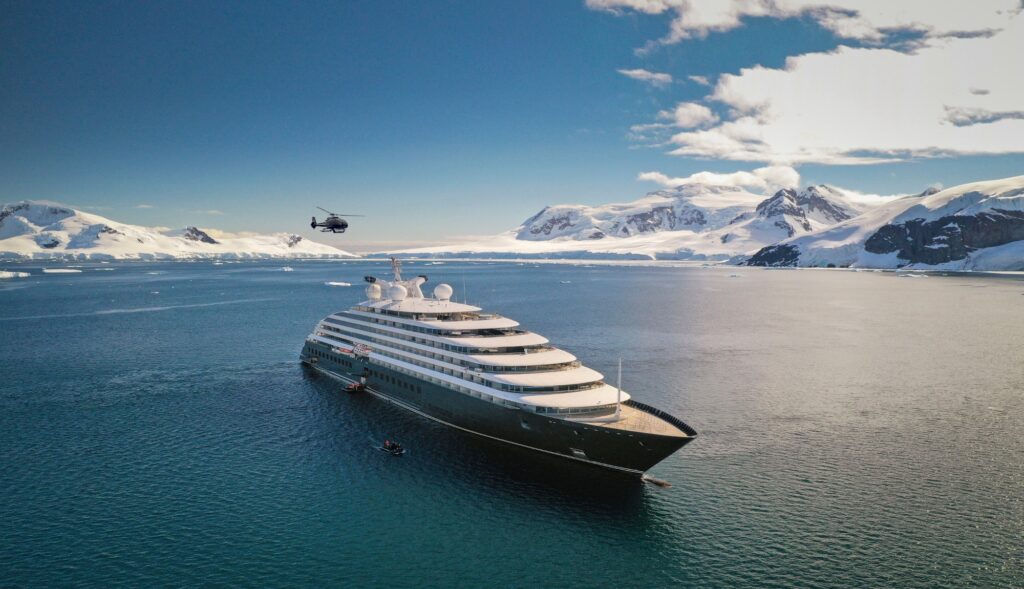
Hull: The outer shell of the ship from the main deck down to the keel. Expedition ships have ice-strengthened hulls. A useful detail in Antarctica.
Keel: The structural spine running along the centre of the ship’s bottom. You rarely see it unless the ship is in dry dock.
Helm: The steering wheel, located on the bridge. You will not be allowed to touch it.
Wake: The trail of foamy water spreading out behind the ship as it moves forward. Occasionally hypnotic. Never the best place to drop your hat.
Cruise Ship Dining Options Explained
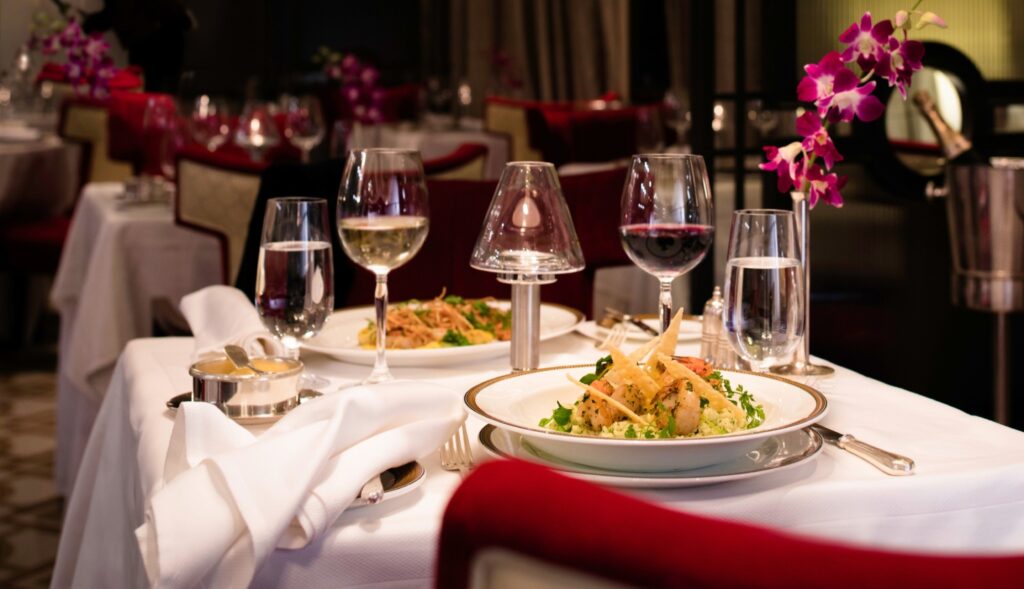
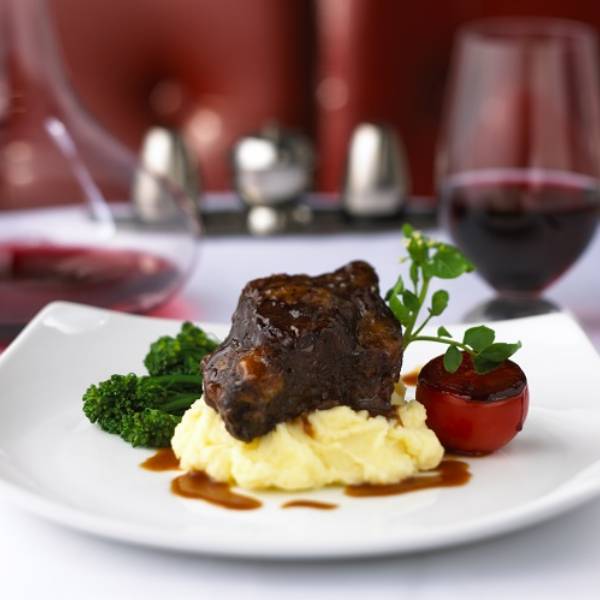
Cruise ship dining has evolved significantly, offering more flexibility than ever before. Meals in the main dining room and buffet are included in your cruise fare.
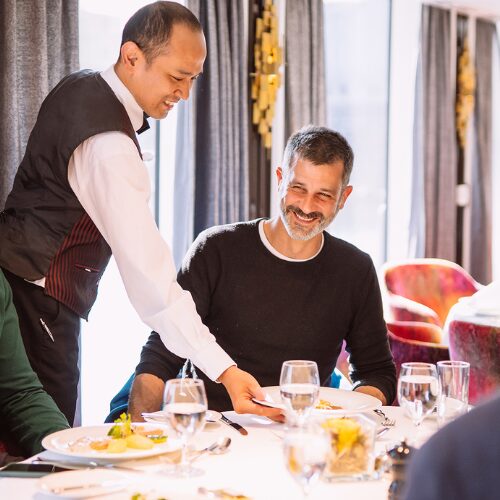
Traditional or fixed dining assigns you a specific dining time and table for the duration of the cruise. Early seating typically begins between 5 and 6 pm, while late seating is usually around 8 pm.
The benefits of fixed dining include having the same waiters each evening and avoiding queues. The drawback is reduced flexibility, particularly on port days.
Flexible dining, sometimes called dining anytime, allows you to dine at a time that suits you within dining room opening hours.
Norwegian Cruise Line calls this Freestyle Dining, Royal Caribbean uses My Time Dining, Carnival offers Your Time Dining, and Princess Cruises refers to it as Dine My Way.
Flexible dining offers freedom around excursions and onboard activities but may involve short waits during peak dining times if reservations are not made in advance.
The Crew You’ll Meet Onboard
Modern cruise ships run with a small city’s worth of staff. These are the roles you are most likely to interact with.
Captain: The person in charge. Has the final word on weather routing, gala dinner timing and whether a port is safe to call at. You’ll meet the Captain at the welcome reception.
Cruise Director: The personality leading the entertainment team. Often the emcee at events, the voice on the morning announcements, and the most relentlessly cheerful person onboard.
Maître d’: The crew member in charge of the main dining room. The one to ask if you’d like a different table, a quieter spot, or a later seating.
Cabin Steward: Looks after your cabin during the cruise. Cleans, restocks, makes the towel animals. A small tip at the end of the cruise rarely goes amiss, even where gratuities are pre-paid.
Purser: Handles guest services and onboard money matters. The reception desk in the atrium is often called the purser’s desk.
Butler: A cabin-level concierge available on suite-grade accommodation on most premium and luxury lines. Will unpack your case, book your dining, and bring you canapés at sundown.
Sommelier: The wine steward in specialty restaurants and the main dining room. Knows the wine list better than the printed menu does.
Booking and Arrival Jargon
The vocabulary of getting on the ship, getting off, and everything you’ll see on your booking confirmation.
Embarkation: Getting on the ship. In practice, an organised cattle drive at the cruise terminal. Show up at your assigned time, not three hours before.
Disembarkation: Getting off the ship at the end of the cruise. Or “debarkation” if you’re feeling American.
Itinerary: The list of ports the ship will visit, with sea days in between. Read this before booking. A Caribbean cruise can mean five completely different shapes of trip.
Sea day: A 24-hour stretch where the ship doesn’t stop in port. Originally the chance to enjoy the ocean. Modernly, the day to do trivia, queue for the buffet and try every specialty venue once.
Port day: The opposite. The ship is docked somewhere and you can go ashore.
Shore excursion (shorex): A guided trip off the ship at a port. Book through the cruise line and the ship cannot sail without you. Book independently and you may have a stressful afternoon.
Tender: A small boat that ferries passengers from a deep-water-anchored ship to the shore at ports where the ship can’t dock. Comfortable enough. Less so when 3,000 passengers want to use it at 4pm.
Transfer: The bus or taxi ride between the airport and the ship, or between the ship and your post-cruise hotel.
Sailaway: The moment the ship leaves port. Often accompanied by a sailaway party on the lido deck, music, drinks and reluctant goodbyes from the dock.
Onboard credit (shipboard credit): A pre-loaded balance applied to your onboard account. Usually offered as a booking incentive. Spend it on drinks, the spa, shore excursions or specialty dining. Doesn’t cover gratuities, frustratingly.
Single supplement: An extra charge solo travellers pay because most cruise fares are quoted per person, based on two sharing. Some sailings waive it. Some river-cruise lines have made solo-friendly fares their whole pitch.
Repositioning cruise: A one-way sailing that moves a ship from one cruising region to another between seasons. Often longer than usual, cheaper per night, with a high ratio of sea days to ports.
Maiden voyage: The first paid sailing of a new ship. Booked years in advance by cruise enthusiasts, often accompanied by media coverage and a christening ceremony. Also called an inaugural cruise.
Fly cruise: A cruise you fly to. Your fare typically includes flights, transfers and the cruise itself, with the cruise line handling the logistics start to finish.
Cruise & stay: A package combining a cruise with a hotel stay either side. Useful for longer-haul itineraries where you want a few days on solid ground before or after the sailing.
Wave season: The January-to-March window when cruise lines run their heaviest promotions. If your dates are flexible, this is when to look.
Cruise Types and Styles Explained
Cruising is not one product. Knowing the styles helps you skip the wrong fit and go straight to what suits you.
All-inclusive cruise: A fare where “all” is doing some heavy lifting. True luxury lines (Seabourn, Regent, Silversea) really do bundle drinks, dining, gratuities and sometimes shore excursions. Mainstream all-inclusive packages tend to leave specialty dining and premium spirits as extras. Read the small print.
Adult-only cruise: A cruise that doesn’t accept children. Quieter pools, more wine evenings, easier dinner reservations.
Family cruise: The opposite. Kids’ clubs, water slides, character meet-and-greets, and three-stage volume on every onboard show.
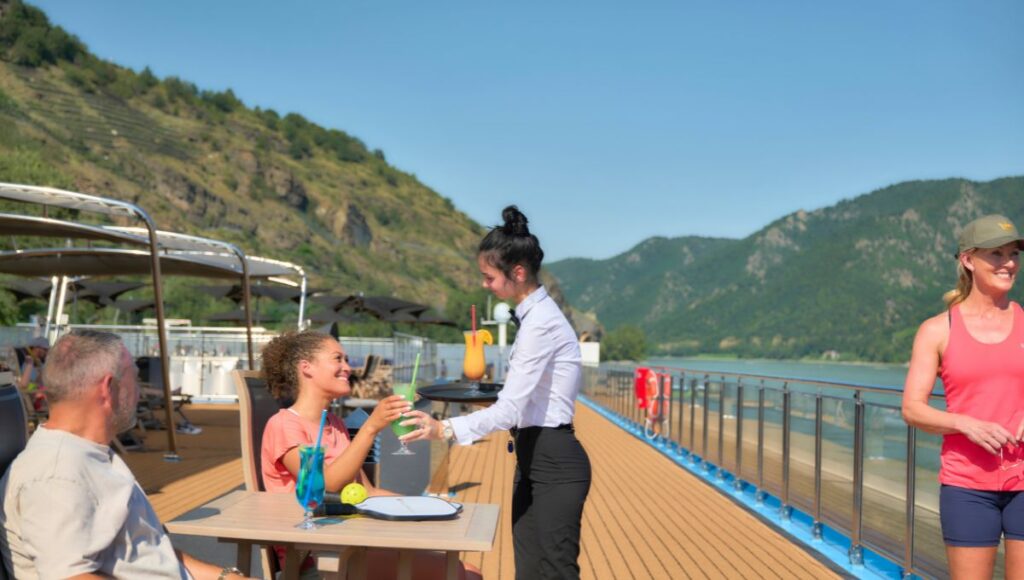
River cruise: A cruise along a river rather than on the open sea. Usually a smaller ship, a more cultural itinerary, frequently with shore excursions included. Danube, Rhine, Mississippi, Nile, Mekong.
Ocean cruise: A cruise on the sea. The thing we mean when we say “cruise” without qualifying it.
Expedition cruise: Smaller, often ice-strengthened ships visiting remote places. Antarctica, the Arctic, Svalbard, the Galápagos. More wildlife, more lectures, fewer poolside cocktails.
Luxury cruise: Smaller ships, larger cabins, higher staff-to-guest ratios, pricier fares, and most extras included.
World cruise: A months-long sailing visiting many regions. Usually booked a year ahead by a self-selecting cohort of repeat cruisers who plan their lives around it.
Theme cruise: A cruise built around a single interest: a music act, dance, food and wine, big band, rugby legends, gardening, classical music. Whatever your passion, someone has a themed sailing.
Essential Cruise Ship Terms Every Passenger Should Know
A muster drill is a mandatory safety briefing held before the ship departs. Guests must attend to learn their assigned muster station in case of an emergency.
A tender is a small boat used to transport passengers from ship to shore when the cruise ship cannot dock directly at a port.
The gangway is the ramp or bridge used to board and exit the ship while in port.
A pilot is a local maritime expert who boards the ship to assist the captain when navigating certain ports or narrow waterways.
Gratuities are service charges shared among the crew. These are usually added automatically to your onboard account, but can sometimes be adjusted.
Onboard credit, often abbreviated to OBC, is spending money added as a booking incentive and can be used for drinks, shore excursions, spa treatments, and onboard shopping.
Learning basic cruise ship terminology makes it easier to understand announcements, deck plans, and dining options.
Speed, Size and Seriously Nautical Bits
Numbers cruise lines quote in brochures, and what they actually mean.
Knot: A nautical mile per hour. One knot is about 1.15 statute miles per hour, so 20 knots is roughly 23 mph. About the speed of a brisk jog. The fastest cruise ships top out around 28 knots.
Nautical mile: 1,852 metres, or 6,076 feet. About 1.15 statute miles. Used because the Earth is round and the maths is easier at sea.
Beam: The width of the ship at its widest point. Important if you’ve ever wondered why some ships fit through the Panama Canal and others don’t.
Gross Registered Tonnage (GRT): The cruise industry’s preferred size metric, measuring enclosed volume rather than weight. Bigger GRT roughly means more space per passenger.
Passenger-space ratio: GRT divided by passenger count. Higher numbers usually mean less crowded ships. Above 40 is generous; above 50 is luxury territory.
Crew-to-passenger ratio: How many crew look after each passenger. Mainstream lines run roughly one crew member per 2.5 guests. Luxury lines push this closer to one-to-one.
Cruise Ship Emergency Codes Explained
Cruise ships use coded announcements to communicate emergencies discreetly without alarming passengers.
Code Alpha indicates a medical emergency.
Code Bravo refers to a fire or serious onboard incident. Repeating the code signals the exact location to the crew.
Code Oscar means man overboard.
Code Delta often relates to hull damage or a biohazard situation.
Code Echo warns of potential collision risks, strong winds, or the ship drifting.
Code Kilo instructs crew members to report to emergency stations.
Code Zulu is used to report a fight or physical altercation onboard.
Brightstar is a severe medical emergency code used by some cruise lines, often referring to a cardiac event.
Mr Skylight is a general emergency alert historically used during major maritime incidents.
Clean-up codes such as 30-30 or Purell discreetly indicate spills or sanitation issues that require attention.
Cruise Ship Crew Slang You Might Hear Onboard
Crew members often develop their own slang due to living and working together for extended periods.
A banana refers to receiving a warning or reprimand from a supervisor.
Mafia is an informal term used jokingly to describe crew members from the same country supporting one another.
Paisano refers to a crew member from the same home country.
Washy washy is the friendly phrase used to encourage hand sanitiser use at buffet entrances, helping prevent illness onboard.
Next cruise is a humorous expression meaning something is unlikely to happen.
Speak to a Cruise Specialist
If any of these terms still feel unclear, or you’d like a hand applying them to a specific itinerary, our specialists can help. Call 020 7947 0270 or browse our full range of luxury cruises and family cruises.
Frequently Asked Cruise Ship Terminology Questions
What does Code Bravo mean on a cruise ship?
Code Bravo indicates a fire or serious onboard emergency requiring immediate crew response.
How can passengers view cruise ship restaurant menus in advance?
Most cruise lines allow guests to view dining menus through the cruise line app or onboard digital screens before dining.